Navigate
HomeStart here
MusingsResearch & long-form
BuildingProjects & learnings
WorkProfessional practice
RunningTraining & races
AboutValues & identity
Notes & ArchiveJournals, essays, portfolio
Back to Culture

Film · Close Readings

The films,
up close.

The ones I keep returning to, and why. What the critics actually applauded, whether the introspection holds up, and the single film I can only watch as an economist.

The centerpiece

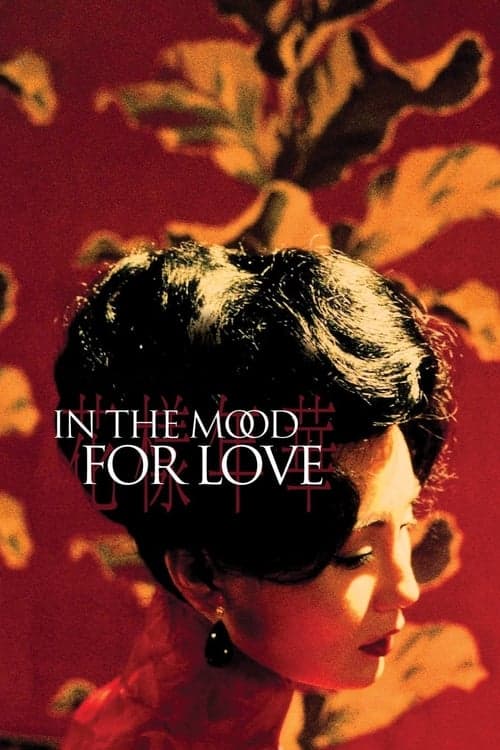
In the Mood for Love

Wong Kar-wai · 2000 · Hong Kong

The acclaim

  • Ranked #5 on Sight & Sound's 2022 critics' poll of the greatest films ever made, the highest any 21st-century film has ever placed, and one of only two films from the 2000s in the all-time top ten.
  • Tony Leung won Best Actor at the 2000 Cannes Film Festival, the first Hong Kong actor to win the prize.
  • Placed #2 on the BBC's 2016 critics' poll of the 100 greatest films of the 21st century, the highest-ranked non-English-language film on the list.
  • At the film's 25th anniversary in 2025, Wong framed his own subject better than any critic: “Can an algorithm understand the weight of a glance between two people?”

What was applauded

What critics single out is the discipline of withholding. Wong builds a complete love story out of the affair that never happens: two neighbors discover their spouses are sleeping together, and across two hours they circle each other in stairwells and rented rooms, rehearsing confrontations they never have and refusing the thing they both want. It is told almost entirely in glances, near-misses, a slowed Shigeru Umebayashi waltz on loop, and Maggie Cheung's procession of cheongsams marking time. The eroticism is in the restraint. The film ends with Chow whispering his secret into a hollow in the ruins of Angkor Wat and sealing it with mud: the unspoken, made literal.

An economist's reading

Economics is the study of the world that didn't happen. Every damages number I have ever computed is a subtraction: the world that occurred, minus the but-for world that would have occurred otherwise. The whole discipline runs on a thing you can never directly observe, only infer.

In the Mood for Love is two hours inside that but-for world. The relationship between Chow and Su is the road not taken, costed in real time. Their famous rehearsals, practicing how they would confront their cheating spouses, practicing the end of an affair they refuse to begin, are counterfactual simulations: they model the life they could have, price it, and decline it. Opportunity cost is usually invisible, the value of the option you gave up. Wong makes it the entire film.

And the ending is the cleanest statement of the idea in any medium. A counterfactual is only ever knowable by its absence. So the unlived life becomes a secret whispered into a wall and packed with earth: real, consequential, and permanently unrecoverable. That is what the world that didn't happen actually feels like.

The introspective canon

Films that put a feeling under glass and refuse to over-explain it. The reason I keep coming back to In the Mood for Love, in other rooms.

Past Lives

Celine Song · 2023

  • Nominated for Best Picture and Best Original Screenplay at the 96th Academy Awards (2024), for Celine Song's debut feature.
  • Won Best Feature at the Gotham Awards; named one of 2023's ten best by both the National Board of Review and the American Film Institute.

The companion piece to In the Mood for Love. Song builds the film around in-yun, the Korean idea that a relationship is the residue of choices made across past lives, then makes a movie that is itself one long counterfactual: Nora and Hae Sung, separated by an ocean and twenty-four years, sitting with the life they would have had. It is a love triangle with no villain and no raised voice, just the quiet arithmetic of the path not taken. The last scene, a wordless wait on a Brooklyn curb, does what the Angkor Wat wall does.

Moonlight

Barry Jenkins · 2016

  • Won Best Picture at the 89th Academy Awards (2017), plus Best Supporting Actor (Mahershala Ali) and Best Adapted Screenplay, from eight nominations.
  • Metacritic 99/100; ranked #5 on the New York Times' 2025 list of the 100 best films of the 21st century.

Jenkins tells one life in three movements, boy to teenager to man, and trusts the gaps between them to do the work. What critics kept naming was the restraint: a Black, queer coming-of-age story carried in held silences, James Laxton's saturated blues, and Nicholas Britell's strings bent like a slowed record. The famous envelope mix-up almost stole the moment. The film never needed the help.

Minari

Lee Isaac Chung · 2020

  • Youn Yuh-jung won Best Supporting Actress at the 93rd Academy Awards (2021), the first Korean performer to win an acting Oscar, one of the film's six nominations.
  • Rotten Tomatoes 98%, Metacritic 89.

An immigrant family bets everything on an Arkansas farm, and Chung films it at the scale of a child's memory rather than a thesis on the American Dream. A.O. Scott wrote that it 'operates at the true scale of life,' and that is the praise: no melodrama, just heat, dirt, and a grandmother who refuses to behave like one.

If Beale Street Could Talk

Barry Jenkins · 2018

  • Regina King won Best Supporting Actress at the 91st Academy Awards (2019); three nominations total, including Jenkins' adapted screenplay and Nicholas Britell's score.
  • Rotten Tomatoes 95%, Metacritic 87.

Jenkins translates James Baldwin into pure image: faces shot in profile and held a beat too long, color pushed past realism, tenderness and dread running at the same time. It is the rare adaptation faithful to the prose, where a young love and a wrongful arrest share one frame without either one softening.

Phantom Thread

Paul Thomas Anderson · 2017

  • Won Best Costume Design at the 90th Academy Awards (2018); six nominations, including Best Picture, Best Director, and Daniel Day-Lewis' final screen role.
  • Metacritic 90.

A couture designer and the woman who refuses to be his mannequin negotiate control through a marriage that runs, eventually, on poisoned mushrooms. Jonny Greenwood's near-constant score and Day-Lewis' exacting stillness build a portrait of obsessive craft that is also, quietly, a comedy about who actually holds the power.

Burning

Lee Chang-dong · 2018

  • Won the FIPRESCI critics' prize at the 2018 Cannes Film Festival and set the highest score in the history of Screen International's critics' jury grid.
  • First Korean film to reach the Best International Feature Oscar shortlist, though not finally nominated. Metacritic 91.

Lee Chang-dong builds two hours of class resentment and dread out of a story that never confirms what happened. The ambiguity is the whole achievement: a fractured point of view that lets a vanished woman, a burning greenhouse, and a rich man's easy smile each mean three things at once.

Little Women

Greta Gerwig · 2019

  • Won Best Costume Design at the 92nd Academy Awards (2020); six nominations, including Best Picture and acting nods for Saoirse Ronan and Florence Pugh.
  • Greta Gerwig's omission from Best Director was one of the year's most discussed snubs. Metacritic 91.

Gerwig cuts the novel out of order, intercutting the sisters' adulthood with their girlhood until the book becomes a story about memory and who gets to author her own life. The restructuring turns a familiar text into an argument about women and work, and the ensemble plays it with warmth instead of reverence.

The Farewell

Lulu Wang · 2019

  • Awkwafina won the Golden Globe for Best Actress in a Musical or Comedy (2020), the first performer of Asian descent to win the category; the film won Best Feature at the Independent Spirit Awards.
  • Received zero Oscar nominations, a widely noted snub. Metacritic 89, Rotten Tomatoes 97%.

A family hides a terminal diagnosis from its matriarch and stages a wedding as cover, and Wang holds the comedy and the grief in the same frame without letting either one win. The control of that tone is the whole film, with Awkwafina's restrained dramatic turn cutting against her comic reputation.

Elevated genre

Big ideas smuggled inside a thriller, a horror, a fairy tale. The shell is genre; the payload is class, the body, desire.

Parasite

Bong Joon-ho · 2019

  • First non-English-language film to win Best Picture; four Oscars at the 92nd ceremony (2020), including Best Director and Best Original Screenplay.
  • Unanimous Palme d'Or at Cannes 2019; named the best film of the 21st century by the New York Times in 2025.

Bong slides from social comedy to home-invasion thriller to tragedy without a visible seam, and encodes the whole class argument in architecture: who lives up the hill, who lives down the stairs, who has to climb. It collapsed the line between art house and crowd-pleaser, and the vertical staging makes the thesis so you are never told it.

The Substance

Coralie Fargeat · 2024

  • Coralie Fargeat won Best Screenplay at Cannes 2024; the film took Best Makeup and Hairstyling at the 97th Academy Awards (2025) from five nominations, including Best Picture and Best Actress.
  • Demi Moore won the Golden Globe, Critics' Choice, and SAG award for the lead.

A fading star injects a black-market serum that births a younger version of herself, and Fargeat shoots the fallout as gleeful, largely practical body horror. Moore gives a self-implicating performance, and the escalation is so literal about how Hollywood discards aging women that the satire stops being subtext and becomes the monster.

The Shape of Water

Guillermo del Toro · 2017

  • Won four Oscars at the 90th ceremony (2018), including Best Picture and Best Director, from a field-leading 13 nominations.
  • Golden Lion, Venice 2017. Metacritic 87.

Del Toro plays a Cold War monster movie as a sincere fairy tale and dares you to find it silly. The control is total: Sally Hawkins carrying the film without a word, the green-toned production design, Alexandre Desplat's score, a fable that takes the side of everyone the era threw away.

The Lobster

Yorgos Lanthimos · 2015

  • Won the Jury Prize at the 2015 Cannes Film Festival; nominated for Best Original Screenplay at the 89th Academy Awards (2017).
  • Metacritic 82, Rotten Tomatoes 88%.

Single people are sent to a hotel and turned into animals if they fail to couple within forty-five days, and Lanthimos plays it in flat, affectless deadpan. It works as a mordant allegory for the social pressure to pair off, and gets unexpectedly moving underneath the absurd premise.

Poor Things

Yorgos Lanthimos · 2023

  • Won the Golden Lion at Venice 2023; Emma Stone won Best Actress at the 96th Academy Awards (2024), one of four wins from eleven nominations.
  • Metacritic 88, Rotten Tomatoes 93%.

A reanimated woman with an infant's brain grows into full self-possession, and Lanthimos builds her a fish-eyed, candy-colored steampunk world to do it in. Emma Stone's fearless, physically uninhibited performance carries it, the rare coming-of-age story with no shame in it.

The Favourite

Yorgos Lanthimos · 2018

  • Olivia Colman won Best Actress at the 91st Academy Awards (2019); the film drew ten nominations, tied for the most that year, and won seven BAFTAs.
  • Grand Jury Prize, Venice 2018. Metacritic 91.

Two cousins claw for the attention of a gout-ridden Queen Anne, and Lanthimos shoots the palace through wide-angle and fisheye lenses by natural candlelight. The trio of performances and the acid, bawdy wit bend a period drama until it turns subversive and contemporary.

Hereditary

Ari Aster · 2018

  • Received zero Oscar nominations, with Toni Collette's omission widely called a snub; she won Best Actress at the Gotham Awards and from several critics' groups.
  • Metacritic 87, Rotten Tomatoes 90%. A landmark of modern A24 horror.

Aster uses grief and inherited family trauma as the real engine and lets the supernatural arrive as an extension of domestic collapse. Collette's raw, unhinged performance anchors it, and the slow-building dread puts it next to Rosemary's Baby and The Exorcist.

The real and the staged

True stories told straight, and films about the cost of making the work. What gets praised here is control: of tone, of ensemble, of a single performance.

Spotlight

Tom McCarthy · 2015

  • Won Best Picture and Best Original Screenplay at the 88th Academy Awards (2016); won the SAG ensemble award.
  • Rotten Tomatoes 97%, Metacritic 93.

The least showy Best Picture winner in years, and that was the point. McCarthy generates tension from reporting craft instead of melodrama, and keeps the ensemble deliberately flat so no one grandstands over the investigation. It is the template for dramatizing institutional rot: let the documents and the dial tone do it.

American Fiction

Cord Jefferson · 2023

  • Cord Jefferson won Best Adapted Screenplay at the 96th Academy Awards (2024) for his directing debut; five nominations, including Jeffrey Wright and Sterling K. Brown.
  • Won the People's Choice Award at Toronto 2023.

A novelist, sick of the market's appetite for Black trauma, writes a deliberate cliché under a pseudonym and watches it become a hit. The tonal control is the trick: the satire of publishing stays sharp while a real family drama runs underneath it, anchored by Wright's exquisitely calibrated restraint.

The Brutalist

Brady Corbet · 2024

  • Won three Oscars at the 97th ceremony (2025), Best Actor (Adrien Brody), Cinematography, and Original Score, from ten nominations.
  • Brady Corbet won the Silver Lion for direction at Venice 2024. Metacritic 90.

A Hungarian-Jewish architect rebuilds a life in postwar America, and Corbet shoots his ambition in VistaVision and 70mm so the scale of the building matches the scale of the cost. Brody's performance was called the best of his career, and the formal nerve is real: a three-and-a-half-hour film that earns its monument.

Birdman

Alejandro González Iñárritu · 2014

  • Won four Oscars at the 87th ceremony (2015), including Best Picture, Best Director, and Best Cinematography (Emmanuel Lubezki).
  • Metacritic 87, Rotten Tomatoes 91%.

A washed-up superhero actor mounts a Broadway play to prove he is more than the cape, and Iñárritu stitches the film into the illusion of one continuous take. Lubezki's camera and the editing keep the anxiety unbroken, and Keaton's meta-textual comeback does the rest.

Argo

Ben Affleck · 2012

  • Won Best Picture and Best Adapted Screenplay at the 85th Academy Awards (2013); Ben Affleck's omission from Best Director was a widely noted snub.
  • Rotten Tomatoes 96%, CinemaScore A+.

The CIA smuggles six Americans out of revolutionary Tehran by passing them off as a fake film crew, and Affleck plays the true story as a taut period thriller. The suspense escalates on William Goldenberg's editing, and the Hollywood satire folds into real geopolitical stakes without cheapening either.

12 Years a Slave

Steve McQueen · 2013

  • Won Best Picture at the 86th Academy Awards (2014), the first Best Picture from a Black director; Lupita Nyong'o won Best Supporting Actress in her film debut.
  • Metacritic 96, the highest-rated wide release of 2013.

McQueen films Solomon Northup's kidnapping into slavery with an unsentimental gaze and long, unbroken takes that refuse to look away. The discipline of that refusal does the work, with Nyong'o's devastating Patsey and a film that insists on the ordinariness of its perpetrators' cruelty.

The Big Short

Adam McKay · 2015

  • Won Best Adapted Screenplay at the 88th Academy Awards (2016) from five nominations, including Best Picture and Best Director.
  • Won the Producers Guild's top award. Metacritic 81.

McKay turns the 2008 financial crisis into a comedy by stopping to explain it: celebrity cameos and characters breaking the fourth wall to define credit default swaps and CDOs. It makes the abstract machinery comprehensible and damning at once, with an ensemble that sells the math.

The Pianist

Roman Polanski · 2002

  • Won the Palme d'Or at Cannes 2002; at the 75th Academy Awards (2003), Roman Polanski won Best Director and Adrien Brody, at 29, became the youngest Best Actor winner.
  • Metacritic 85, Rotten Tomatoes 95%.

Polanski tells Władysław Szpilman's survival in occupied Warsaw with harsh objectivity, refusing to turn him into a hero. That restraint, and Brody's gaunt, internalized performance, make a Holocaust film built on observation rather than uplift.

Whiplash

Damien Chazelle · 2014

  • Won three Oscars at the 87th ceremony (2015), including Best Supporting Actor (J.K. Simmons) and Best Film Editing.
  • Won the Grand Jury and Audience prizes at Sundance 2014. Metacritic 89.

A young drummer and his abusive conductor lock into a duel over what greatness costs, and Tom Cross cuts the music with the percussive violence of the playing. The editing and the sweat-and-blood tension are relentless, with Simmons's terrifying instructor at the center.

Wes Anderson

I have seen every one. Anderson gets read as all symmetry and pastel, but the through-line is grief: the dollhouse precision is a way to hold something that would otherwise fall apart. Seven Oscar nominations across these features, zero wins, until a short film finally broke the streak in 2024.

Bottle Rocket

Wes Anderson · 1996

  • No awards on release; a commercial failure that built its reputation later. Martin Scorsese named it one of his favorite films of the 1990s.
  • Rotten Tomatoes 86%.

The debut, before the style fully hardened into itself. Scorsese praised how Anderson 'conveys the simple joys and interactions between people,' and you can already see the deadpan tenderness that everything after would formalize.

Rushmore

Wes Anderson · 1998

  • Won Best Director (Anderson) and Best Supporting Actor (Bill Murray) at the 1999 Independent Spirit Awards; selected for the National Film Registry in 2016.
  • Metacritic 86.

The film that recast Bill Murray as a melancholy dramatic actor, and the first full statement of Anderson's deep-focus, comedy-plus-pain register. Its best move is refusing to sentimentalize a fundamentally immature hero.

The Royal Tenenbaums

Wes Anderson · 2001

  • Nominated for Best Original Screenplay at the 74th Academy Awards (2002); Gene Hackman won the Golden Globe for Best Actor.
  • On the BBC's 2016 list of the century's greatest films.

A house of damaged prodigies, each given real emotional weight under the storybook surface. Hackman's precision grounds the whimsy, and the melancholia underneath is the thing critics kept returning to.

The Life Aquatic with Steve Zissou

Wes Anderson · 2004

  • Anderson's most divisive live-action film on release (Rotten Tomatoes 57%), substantially reappraised since.
  • Seu Jorge's Portuguese-language Bowie covers became their own artifact.

On release, several critics felt the style had frozen into mannerism. The reappraisal centers on the cutaway-ship design and the grief beneath the absurdist adventure, the one Anderson film where 'underrated' is genuinely part of the record.

The Darjeeling Limited

Wes Anderson · 2007

  • Won the Little Golden Lion at the 2007 Venice Film Festival.
  • Metacritic 67.

Three brothers haul their inherited baggage across India, which Ebert praised Anderson for using 'not in a touristy way, but as a backdrop that is very, very there.' The lyrical melancholy is strong; even admirers noted the tics tightening.

Fantastic Mr. Fox

Wes Anderson · 2009

  • Nominated for two Oscars at the 82nd ceremony (2010), Best Animated Feature and Best Original Score.
  • Metacritic 83.

Stop-motion was the perfect match for the obsessive design: fur that ripples frame to frame because it was touched by hand. The handmade texture keeps Roald Dahl's mischief while adding an adult ache.

Moonrise Kingdom

Wes Anderson · 2012

  • Nominated for Best Original Screenplay at the 85th Academy Awards (2013); opened Cannes 2012, his first film to screen there.
  • Metacritic 84.

Two children run away into a flat, symmetrical 1960s storybook, and the young leads carry first-love feeling with almost no dialogue. 'Almost every frame a beautiful photograph' became the standard line, and for once it was praise rather than complaint.

The Grand Budapest Hotel

Wes Anderson · 2014

  • Won four Oscars at the 87th ceremony (2015), Production Design, Costume, Makeup, and Score, from nine nominations including Picture, Director, and Screenplay; tied for the most wins that year.
  • Five BAFTAs. Metacritic 88, his critical peak.

Ralph Fiennes' fast, screwball concierge is the engine, and the nested story-within-a-story (a different aspect ratio for each era) is the most ambitious frame Anderson has built. The doll's-house design is in service of grief: a vanished Mitteleuropa held in a snow globe.

Isle of Dogs

Wes Anderson · 2018

  • Won the Silver Bear for Best Director at Berlin 2018; nominated for two Oscars (Animated Feature, Score).
  • Metacritic 82.

Intricate stop-motion at its most detail-dense. It also drew real criticism for its handling of Japanese culture, unsubtitled dialogue and a white-savior lead, a debate critics took up on both sides and one worth naming rather than skipping.

The French Dispatch

Wes Anderson · 2021

  • Premiered in competition at Cannes 2021; critics'-circle wins for production design and ensemble.
  • Metacritic 74.

A loving ode to mid-century magazine journalism, modeled on The New Yorker and told as a stack of separate 'articles.' The hand-crafted density delighted some and overstuffed others; the anthology structure is the love-it-or-not hinge.

Asteroid City

Wes Anderson · 2023

  • Competed for the Palme d'Or at Cannes 2023.
  • Metacritic 76.

A play-within-a-documentary set in a 1950s atomic-age desert, openly about the human urge to organize and control. Scarlett Johansson drew the strongest notices for cracking the ordered surface, and the post-pandemic grief reads clearly underneath.

Christopher Nolan

Also every one. Nolan's real subject is not spectacle, it is time: how to break it, nest it, run it backward, and make a multiplex feel it. He shot on IMAX and built it practically for two decades before the Academy finally handed him Director and Picture for Oppenheimer.

Following

Christopher Nolan · 1998

  • Won the Tiger Award at Rotterdam 1999; shot for roughly $6,000.
  • Rotten Tomatoes 82%.

The no-budget debut, and already a triple-tiered, out-of-order neo-noir. The Los Angeles Times called it 'taut and ingenious'; it reads now as a complete statement of intent.

Memento

Christopher Nolan · 2000

  • Nominated for two Oscars at the 74th ceremony (2002), Best Original Screenplay and Best Film Editing; won Best Feature, Director, and Screenplay at the Independent Spirit Awards.
  • Metacritic 83; the WGA later ranked the script among the century's greatest.

The film told backward, so the viewer is trapped inside the hero's memory loss alongside him. The reverse chronology is not a gimmick but the entire argument, and it is the thing critics never stopped praising.

Insomnia

Christopher Nolan · 2002

  • Nolan's only studio remake; received no Oscar nominations.
  • Metacritic 78.

Pacino as a sleep-starved, compromised detective and Robin Williams cast hard against type as the killer. The Alaskan midnight sun externalizes the unraveling; Ebert called it 'not a pale retread, but a re-examination of the material.'

Batman Begins

Christopher Nolan · 2005

  • Nominated for Best Cinematography at the 78th Academy Awards (2006).
  • Metacritic 70; grossed about $372 million and rebooted the franchise on realistic footing.

The grounded reboot that put character and plausibility over camp, with equipment (the Tumbler, the suit) you could believe someone actually built. Ebert: 'the Batman movie I've been waiting for.'

The Prestige

Christopher Nolan · 2006

  • Nominated for two Oscars at the 79th ceremony (2007), Art Direction and Cinematography.
  • Metacritic 66; its reputation has grown as a rewatch puzzle.

Two magicians ruin each other in dueling diaries, and the film's obsession-and-sacrifice theme mirrors its own sleight of hand. The structure is the trick, and the construction rewards a second look.

The Dark Knight

Christopher Nolan · 2008

  • Heath Ledger won Best Supporting Actor posthumously at the 81st Academy Awards (2009), one of two wins from eight nominations; added to the National Film Registry in 2020.
  • Metacritic 85; the first superhero film to pass $1 billion.

Ledger's anarchic Joker is routinely named one of the great screen villains, and the film plays as a crime epic about escalation and what order costs. Nolan's early IMAX sequences gave the action a scale the genre had not had.

Inception

Christopher Nolan · 2010

  • Won four Oscars at the 83rd ceremony (2011), Cinematography, both Sound awards, and Visual Effects, from eight nominations including Best Picture.
  • Grossed about $839 million.

Dreams nested inside dreams at different speeds, with a rotating-corridor fight built practically rather than keyed. It proved an original, idea-first blockbuster could win both the box office and the argument, and the spinning top still won't settle.

Interstellar

Christopher Nolan · 2014

  • Won Best Visual Effects at the 87th Academy Awards (2015), from five nominations.
  • Metacritic 74; grossed about $681 million.

Kip Thorne's relativity equations shaped the black hole so precisely the visualization doubled as published science. Underneath the spectacle it is a father-daughter film about time dilation: love measured in the years it costs.

The Dark Knight Rises

Christopher Nolan · 2012

  • No Oscar nominations; nominated for the BAFTA for Best Special Visual Effects and named an AFI top-ten film of 2012.
  • Metacritic 78; grossed $1.115 billion.

The trilogy's heavy, large-format finale, with Tom Hardy's Bane as a physical and vocal wall. Critics found it thematically weighty even where the plot overstuffed, a closing on the scale Nolan had taught audiences to expect.

Dunkirk

Christopher Nolan · 2017

  • Won three Oscars at the 90th ceremony (2018), Film Editing and both Sound awards; earned Nolan his first Best Director nomination, plus Best Picture.
  • Metacritic 94, the best-reviewed film of his career.

Three timelines at once, a week on land, a day at sea, an hour in the air, told nearly without words. The 65mm immersion and the ticking-watch, Shepard-tone score (built on Nolan's own pocket watch) hold the tension without a slack frame.

Tenet

Christopher Nolan · 2020

  • Won Best Visual Effects at the 93rd Academy Awards (2021).
  • Metacritic 69; the first Hollywood tentpole to open after the 2020 shutdowns.

Time inversion staged as a 'temporal pincer,' with a real Boeing 747 crashed for the set piece. It divided his audience more than usual: the concept was audacious, the exposition dense, and the sound mix buried the dialogue.

Oppenheimer

Christopher Nolan · 2023

  • Won seven Oscars at the 96th ceremony (2024), including Best Picture, Best Director (Nolan's first), Best Actor (Cillian Murphy), and Best Supporting Actor (Robert Downey Jr.); seven BAFTAs and five Golden Globes.
  • About $976 million worldwide, the highest-grossing biographical film ever.

Shot partly in the first-ever IMAX black-and-white, it intercuts Oppenheimer's subjective color with the monochrome of the hearing that destroyed him. The Trinity test recreated without CGI was the recurring point of awe, and the film finally won Nolan the two prizes that had eluded him.