Heritage Study
Parsi
Architecture.
Sacred geometry and colonial grandeur: exploring the architectural legacy of India's Zoroastrian community from fire temples to Mumbai's skyline.
Personal connection: Tipu Sultan's Summer Palace in Mysore, where Persian floral traditions meet South Indian teak
150+
Fire Temples in India
8
Atash Behrams (Highest Grade)
1,200+
Years of Oldest Sacred Fire
19th C
Peak Building Era
Historical Context
From Persia to India
The Zoroastrian exodus from Persia following the Arab conquest created one of history's most remarkable stories of diaspora and cultural preservation. Fleeing religious persecution, they carried with them not just sacred fires, but an entire civilization's worth of architectural knowledge and aesthetic traditions.
The route of the diaspora: Pars to Bombay, the sacred fire kept alive the whole way
Elephanta Caves, Mumbai: ancient rock-cut temples on an island in the harbour
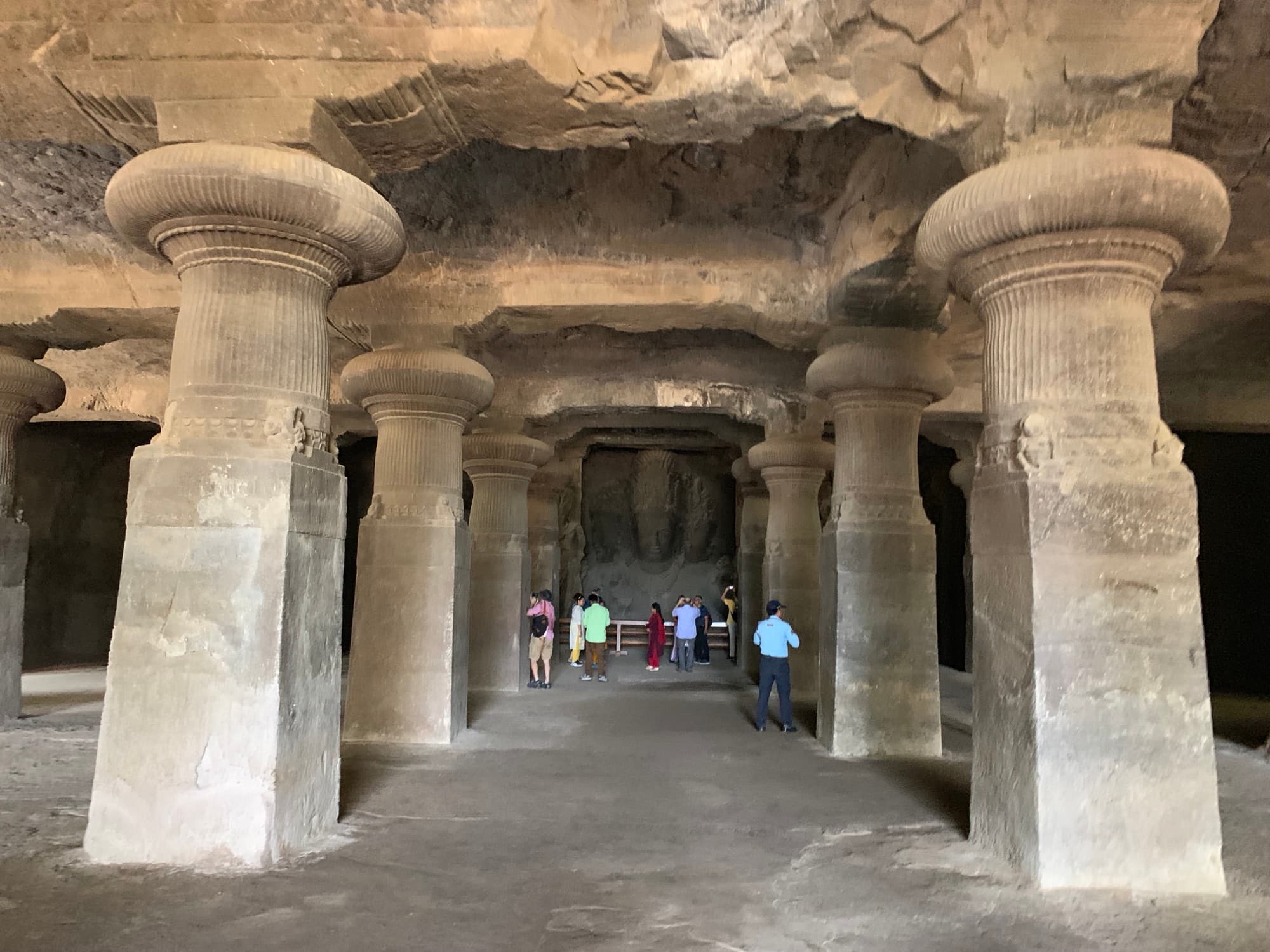
Elephanta Caves, Ancient Rock-Cut Temple Interior
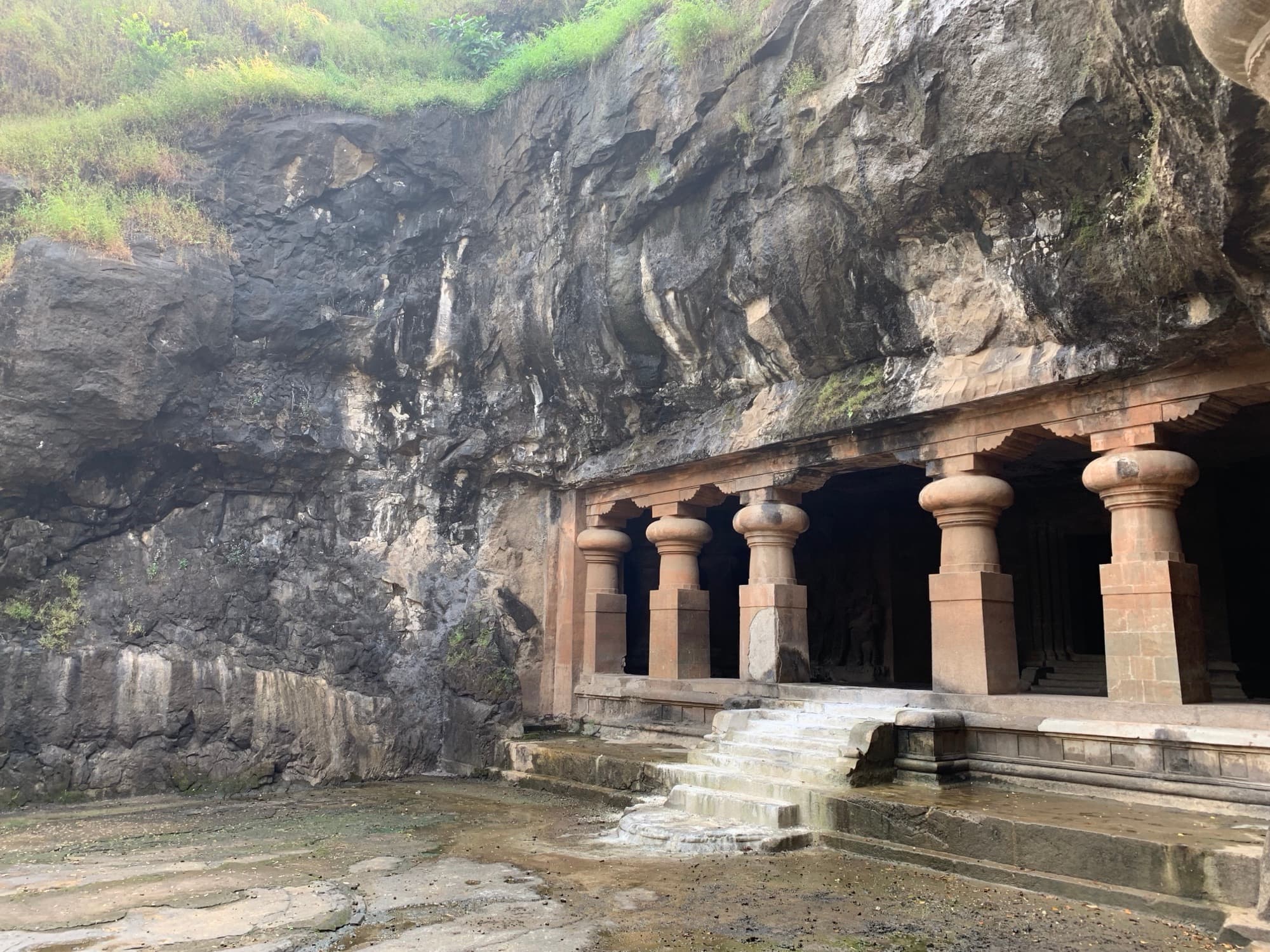
Elephanta Caves, Columned Entrance Pavilion
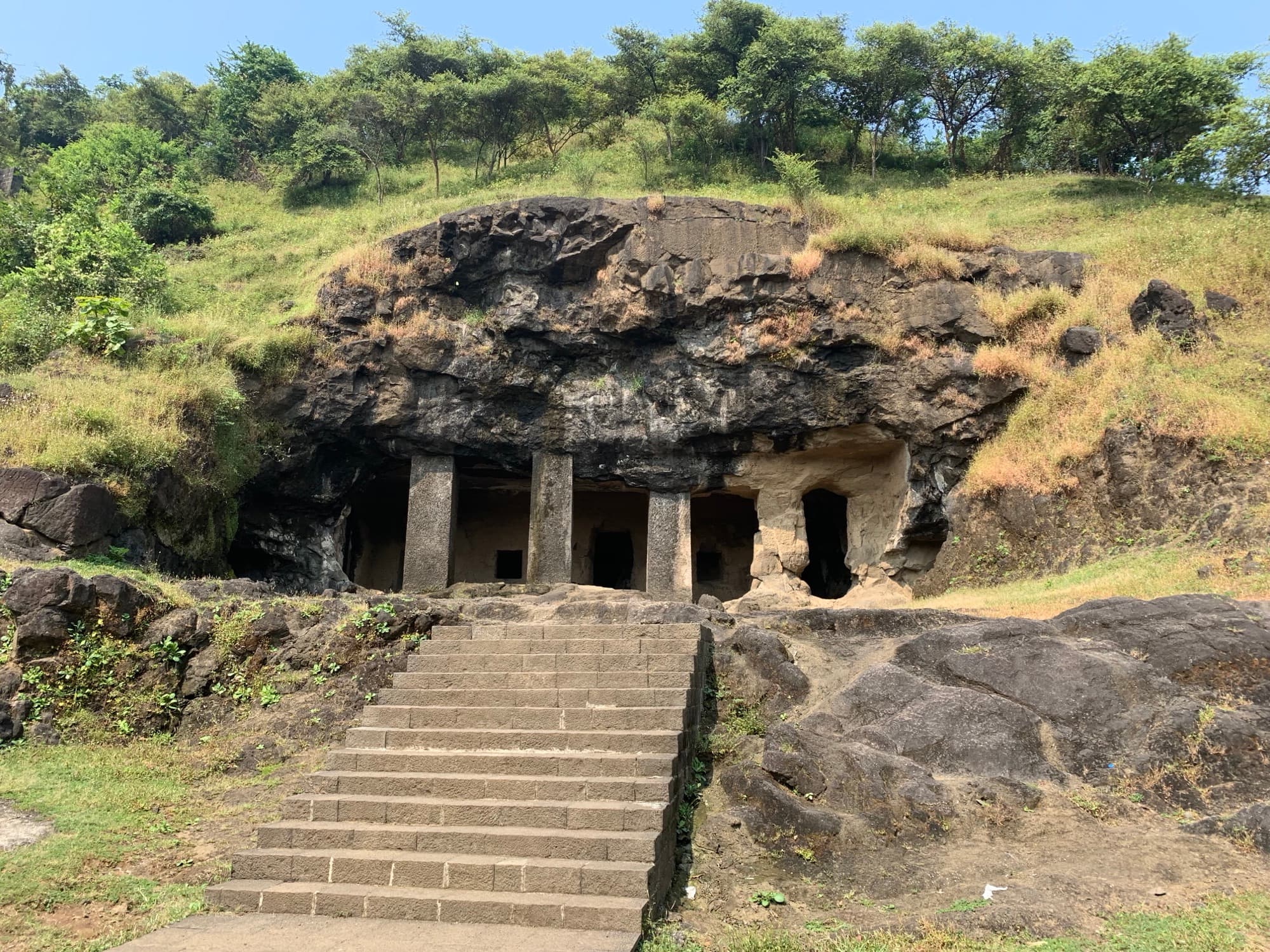
Elephanta Caves, Approach from the Hillside
A Timeline of Migration & Building
Arab Conquest of Persia
The Sassanid Empire falls to Arab armies at the Battle of al-Qadisiyyah. Zoroastrians face persecution under the new Islamic caliphate.
First Migration Wave
Zoroastrian refugees begin fleeing Persia. Some settle in the mountains of Khorasan, others look toward the sea.
Landing at Sanjan
A group of Zoroastrians lands on the coast of Gujarat. Local Hindu ruler Jadi Rana grants them refuge under conditions they adopt local dress and language.
Iranshah Fire Consecrated
The sacred Iranshah fire, kindled from 16 different fire sources brought from Persia, is consecrated at Sanjan. It still burns today, over 1,000 years later.
Migration to Navsari
Due to invasions, the Iranshah fire is moved to Navsari, then to Udvada in 1742 where it remains today.
East India Company Partnership
Parsis begin trading partnerships with the British East India Company in Surat, laying foundations for future commercial dominance.
Wadia Shipbuilding Dynasty
Lovji Nusserwanjee Wadia establishes the Bombay Dockyard. The Wadias will build over 170 ships for the British Navy, including HMS Minden.
The Golden Age
Parsi families (Tatas, Wadias, Petits, Readymoneys, Jejeebhoys) transform Bombay. They fund railways, universities, hospitals, and the Gothic buildings that define Mumbai's skyline.
The Qissa-i Sanjan
According to the Qissa-i Sanjan (Story of Sanjan), when Zoroastrian refugees arrived in Gujarat, the local ruler Jadi Rana was initially reluctant to accept them. He sent them a vessel of milk filled to the brim, symbolizing that his land could hold no more people.
The Zoroastrian high priest added sugar to the milk without spilling a drop, signifying that they would blend into Indian society while enriching it. Jadi Rana was so moved by this wisdom that he granted them refuge, under conditions that they adopt Gujarati dress and language, and that their women wear saris.
“Like sugar in milk, the Parsis dissolved into India, invisible yet indispensable, sweetening the nation without displacing it.”
Deep Dive
Dadar Parsi Colony
The largest Zoroastrian colony in the world, born from plague, built on a 999-year lease, and shaped by an ethos of interfaith acceptance that made it one of Mumbai's most distinctive neighborhoods.
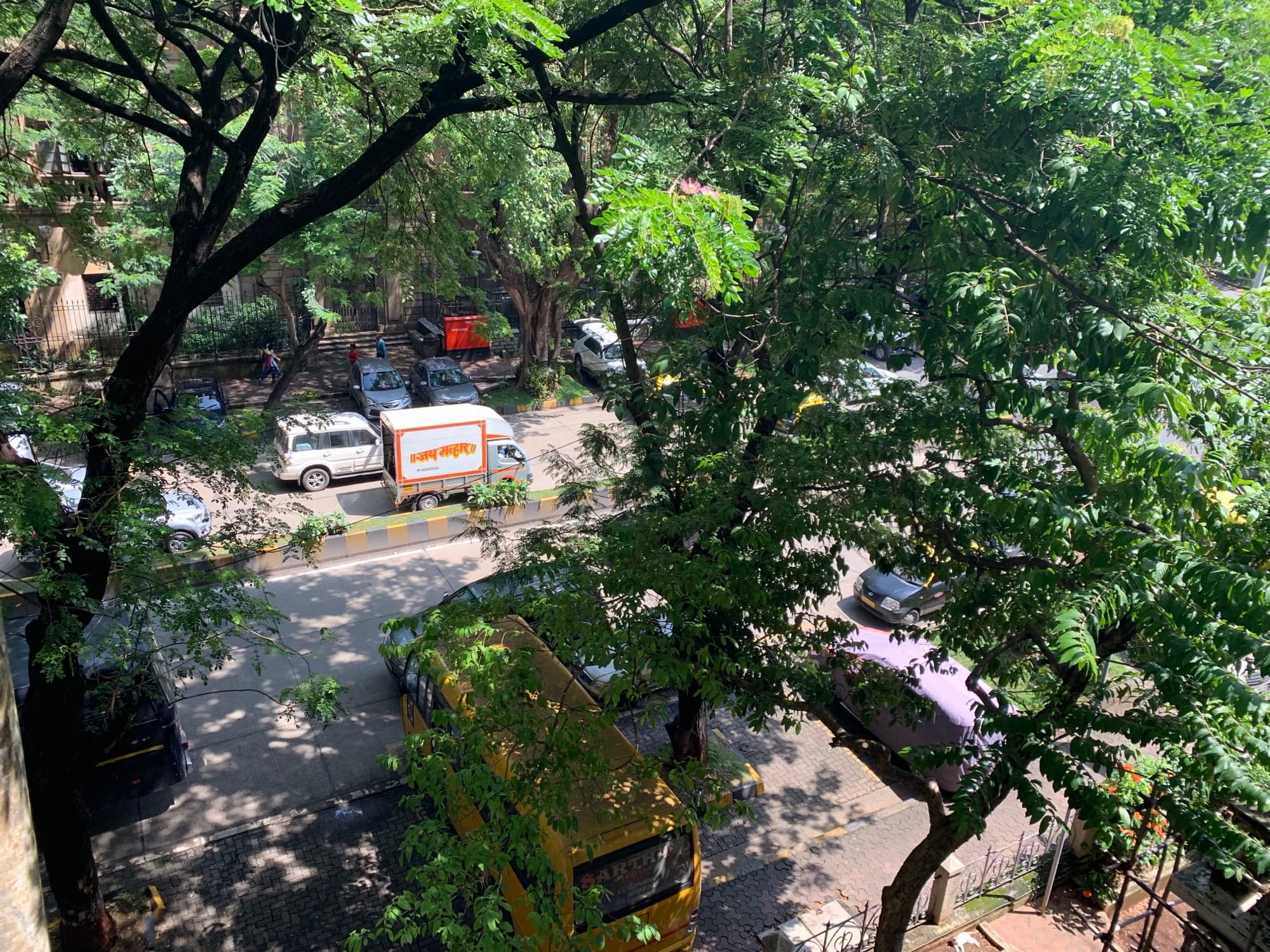
Leafy Tree-Lined Streets of Mumbai
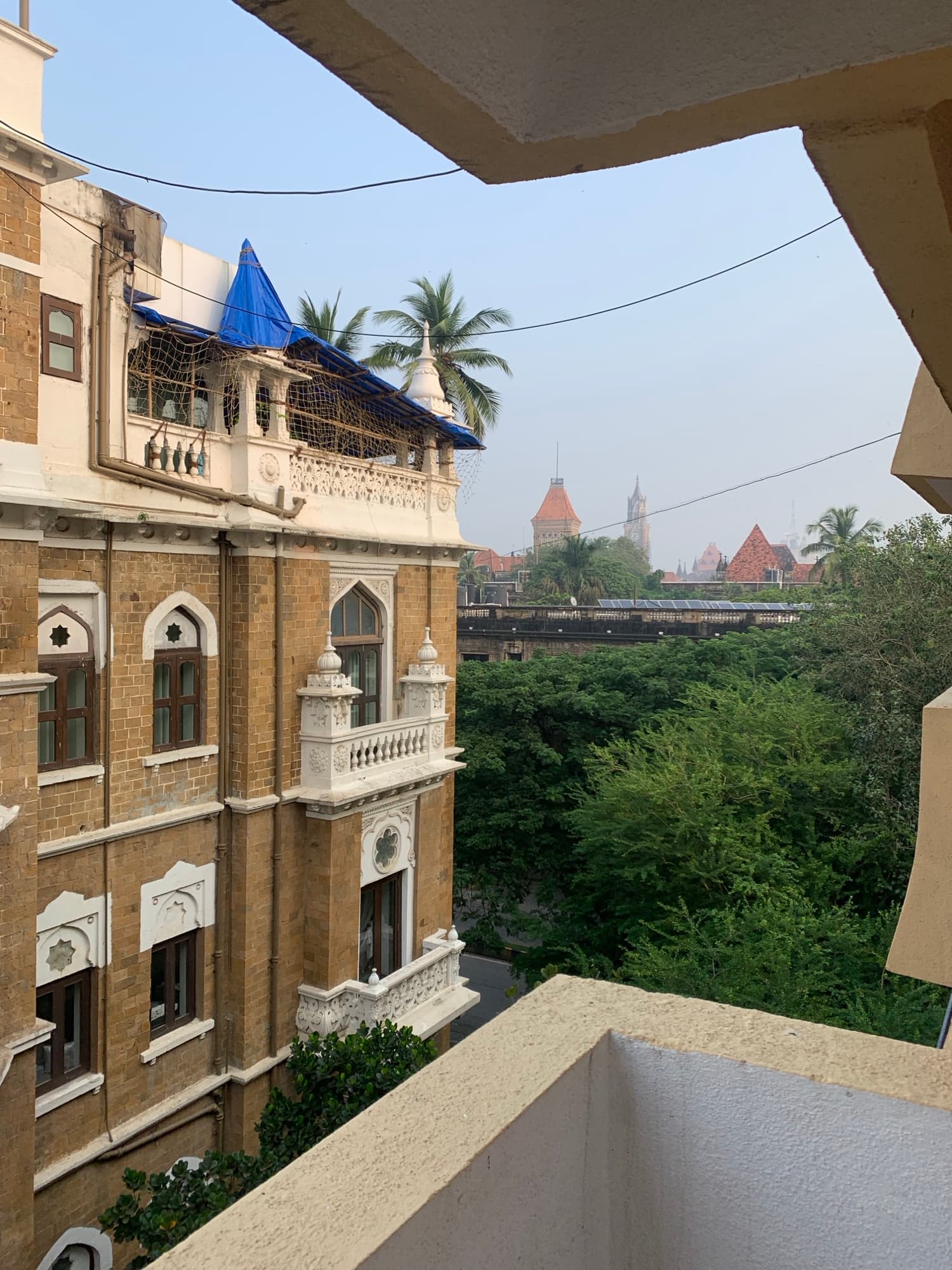
Heritage Colonial Architecture, Parsi Colony Building
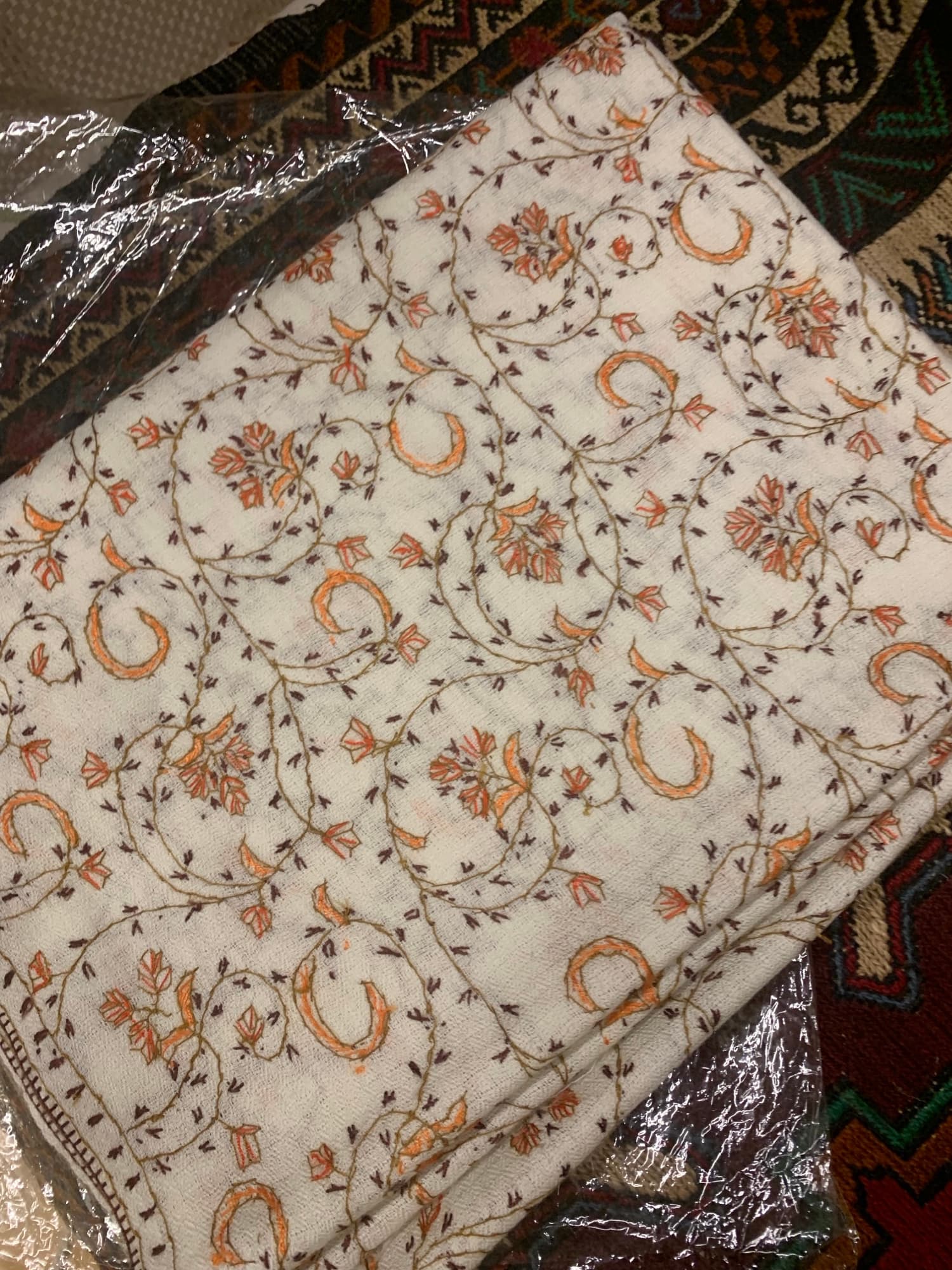
Parsi Embroidery, Traditional Textile Craft
Mancherji Joshi
Civil servant from Karachi who convinced British colonial authorities to allocate 103 plots for a Zoroastrian-focused community after the 1896 Bubonic plague.
He planned every detail, down to the tree and flower selections, and secured a 999-year lease. A bust at the colony entrance memorializes him.
Colony Landmarks
Rustom Faramana Agiary
The colony's main fire temple, with a continuously burning flame for over 90 years.
Della Tower ("Persepolis")
A 21-story modern building designed by Jimmy Mistry, featuring Avestan prayers and Achaemenian-inspired architecture.
Dadar Arthonan Institute
Founded in 1919, the world's only Zoroastrian priest training school (seminary).
J.B. Vachha High School
Parsi Girls' school celebrating over 100 years. Though Parsi-founded, it served students of all faiths.
Culture & Community
Interfaith roots
Though intended for Zoroastrians, DPC accepted residents of other faiths from the start. Hindu, Muslim, and Christian families settled alongside Parsis.
Freddie Mercury connection
Born Farrokh Bulsara, Queen's lead singer was Zoroastrian and spent childhood at relatives' homes in DPC. He reportedly visited the Rustom Faramana Agiary regularly.
Parsi naming traditions
Surnames often reflect ancestral trades: Sodabottleopenerwallah (bottle business), Daruwallah (liquor dealers), Engineer, Doctor. Cawasji Readymoney, a 1600s opium trader who financed public works, earned his name literally.
Jame-e-Jamshed
Asia's second-oldest newspaper (first published March 12, 1832), still reflecting modern Zoroastrian community concerns.
“Everyone prayed to their respective gods and to each other's gods, and that was just fine.”
An estimated 110,000–120,000 Zoroastrians exist worldwide (FEZANA, 2012), making them a dwindling community.
Source: Anu Prabhala, “Why Dadar Parsi Colony, Mumbai” (Substack)
Personal Heritage
The Mysore Connection
My particular connection to this heritage came in Mysore, at Tipu Sultan's Summer Palace (Daria Daulat Bagh). Built in 1784, the teak palace is covered floor to ceiling in Persian-influenced floral frescoes, cusped arches, and painted wooden panels that carry the same visual language as the fire temples and Mughal courts hundreds of miles north.
What struck me was the botanical obsession: every surface alive with flowers. Not decorative repetition but a vocabulary: lotuses, roses, vine scrollwork, bouquets in niches. Centuries of pigment wearing through plaster, the saffron ground showing beneath, green patina creeping over dark frescoes. The multifoil arches and jali lattice screens felt like a direct thread from Persia through Gujarat to Karnataka, the same aesthetic DNA expressed in teak and lime instead of stone.
Tipu Sultan's Summer Palace (Daria Daulat Bagh), Srirangapatna, Mysore
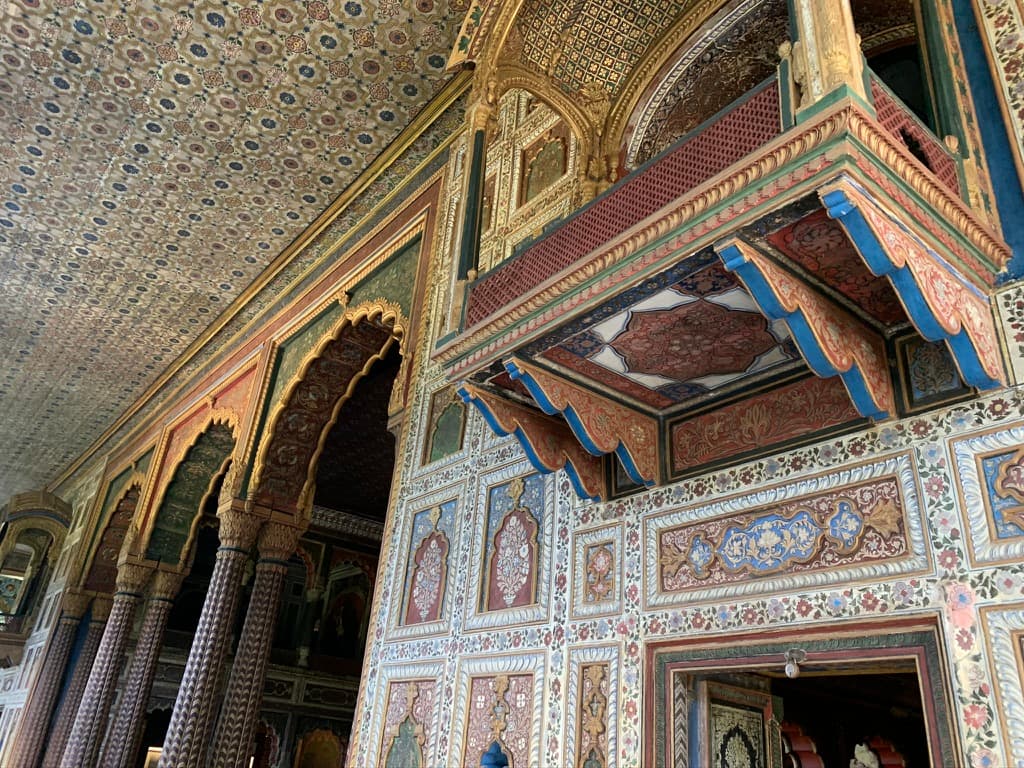
Interior Hall: Multifoil Arches, Blue Brackets, and Floral Tile Panels
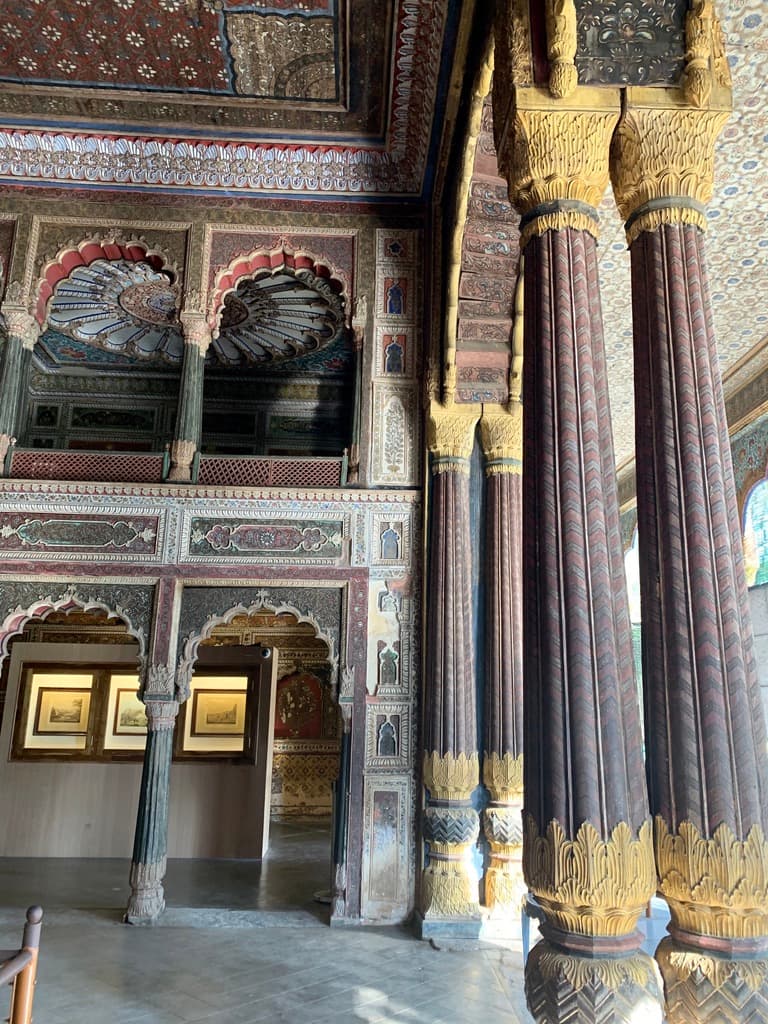
Fluted Columns with Gold Acanthus Capitals and Fan Arch Gallery
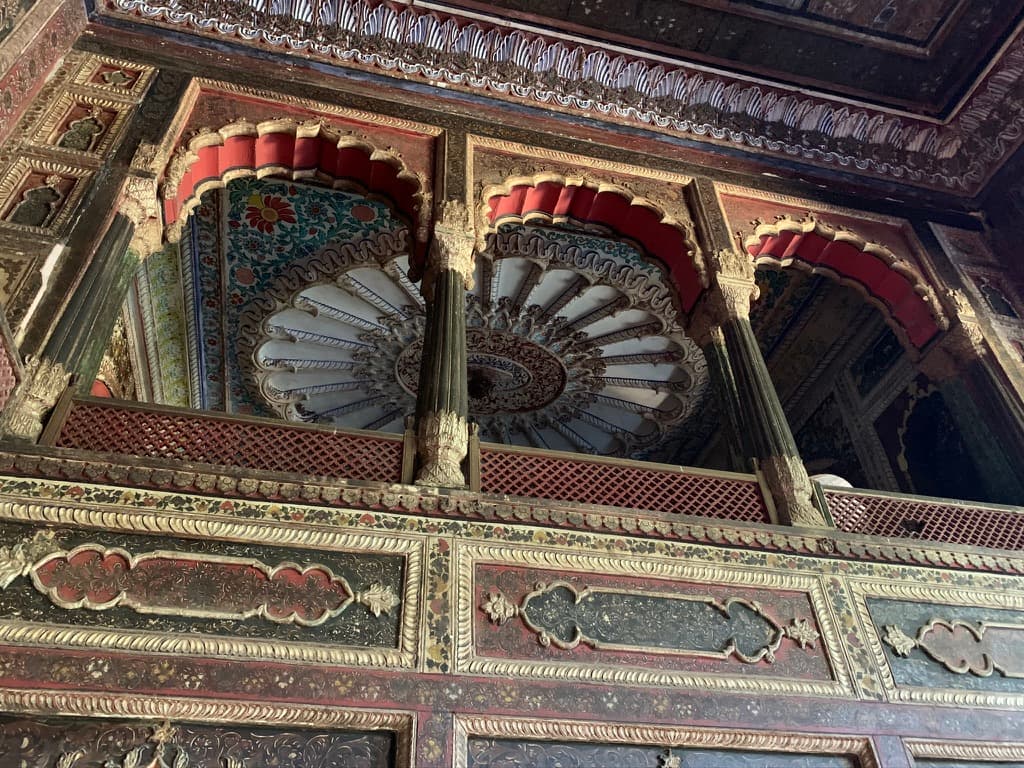
Peacock-Tail Fan Arches with Red Scalloped Edges
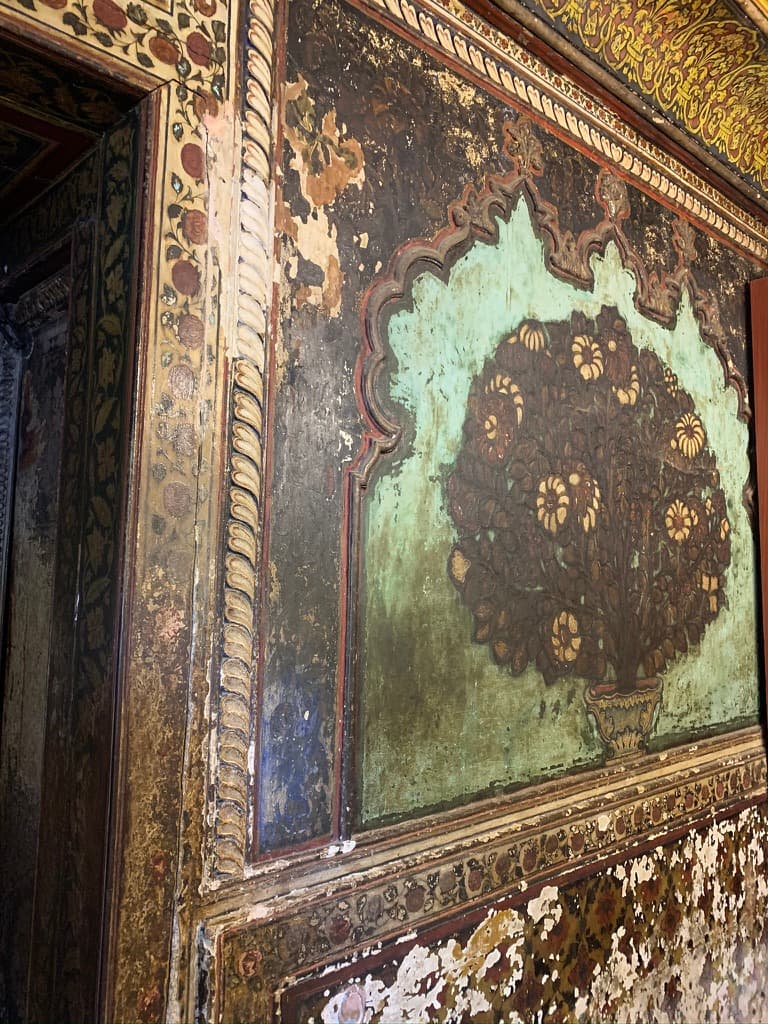
Aged Bouquet Fresco in a Cusped Arch Niche, Green Patina
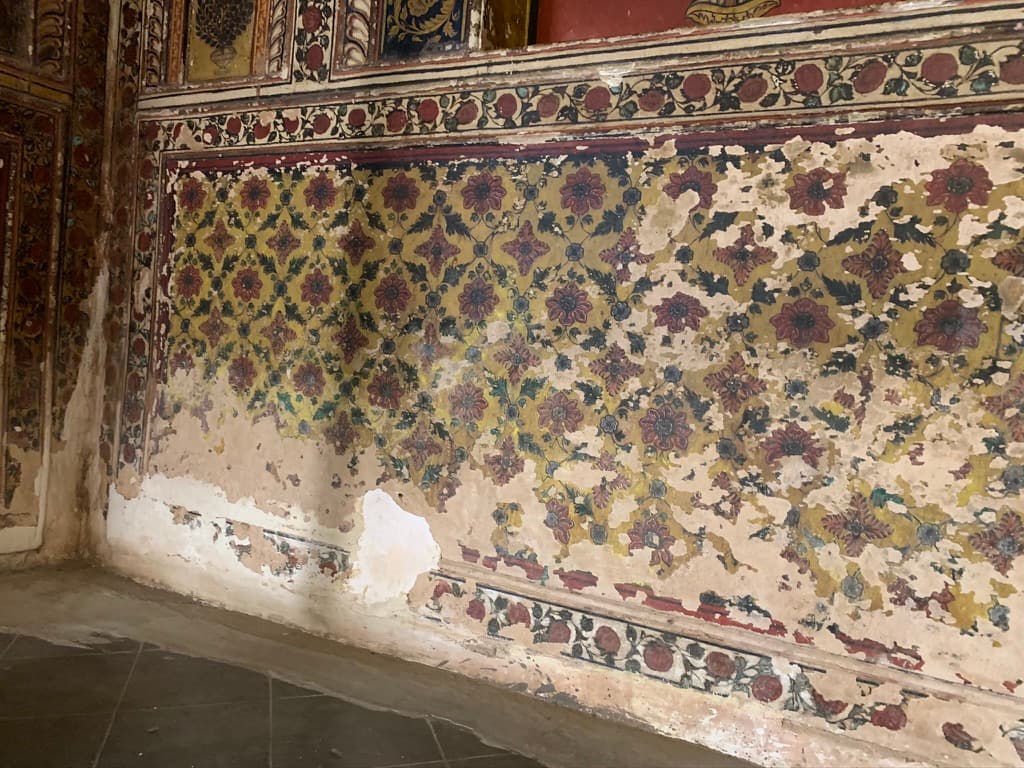
Repeating Floral Wall Fresco: Saffron Ground, Centuries of Patina
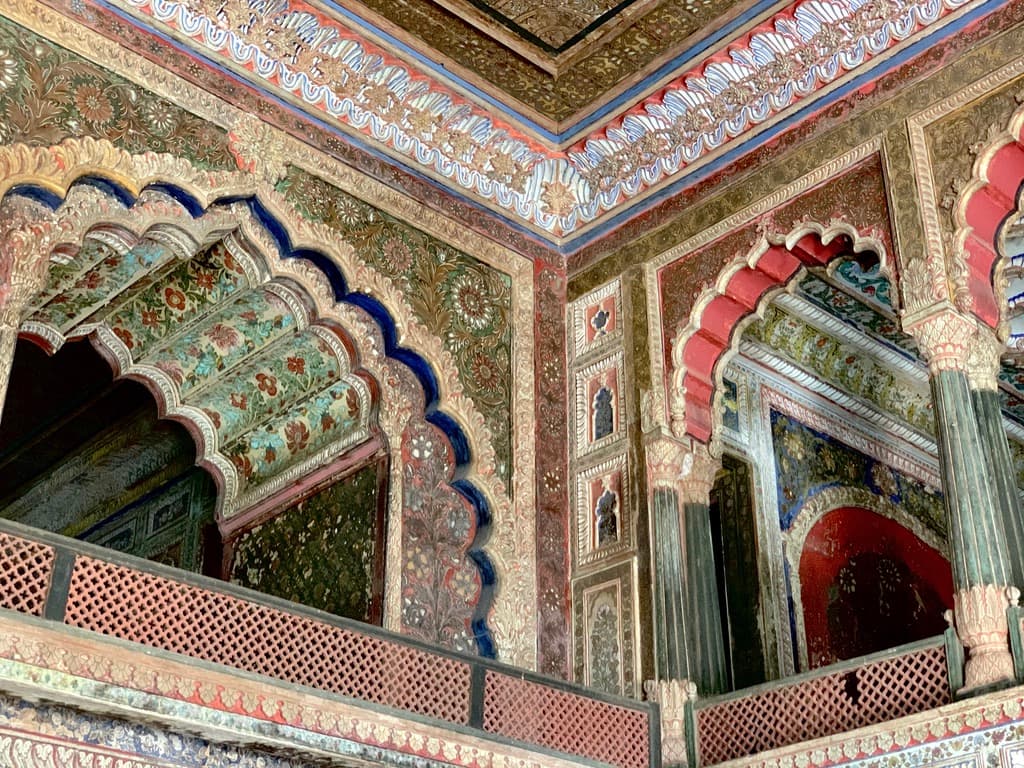
Blue and Red Scalloped Arches with Jali Lattice Screens
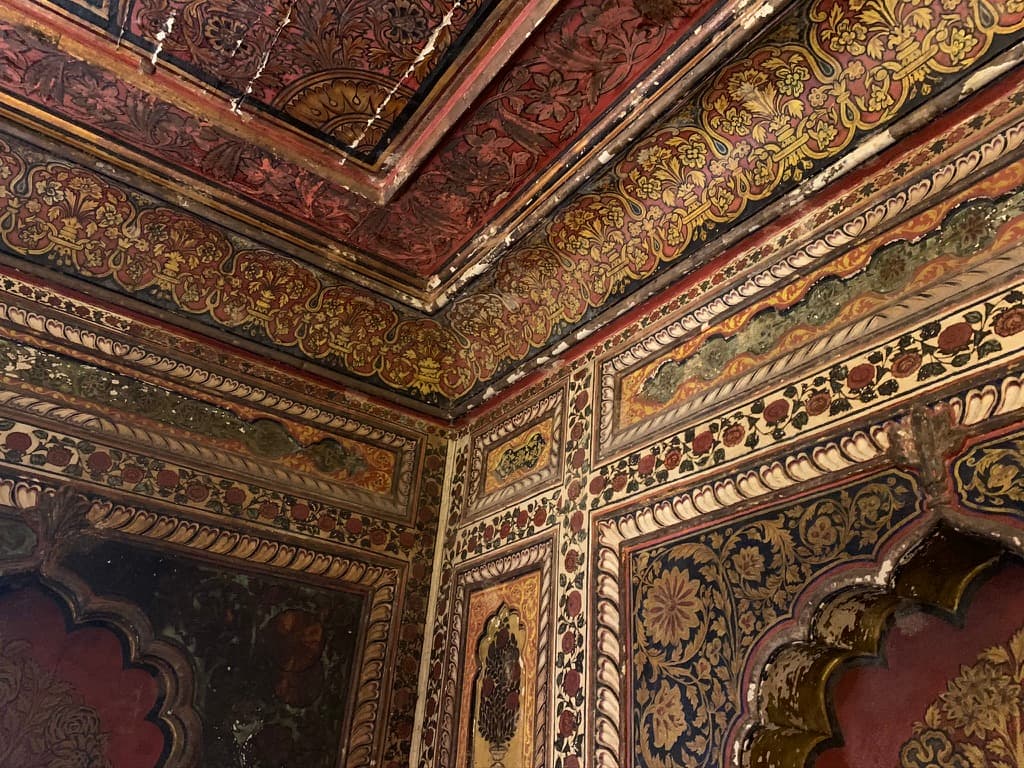
Crimson and Gold Floral Borders, Rope-Twist Molding Detail
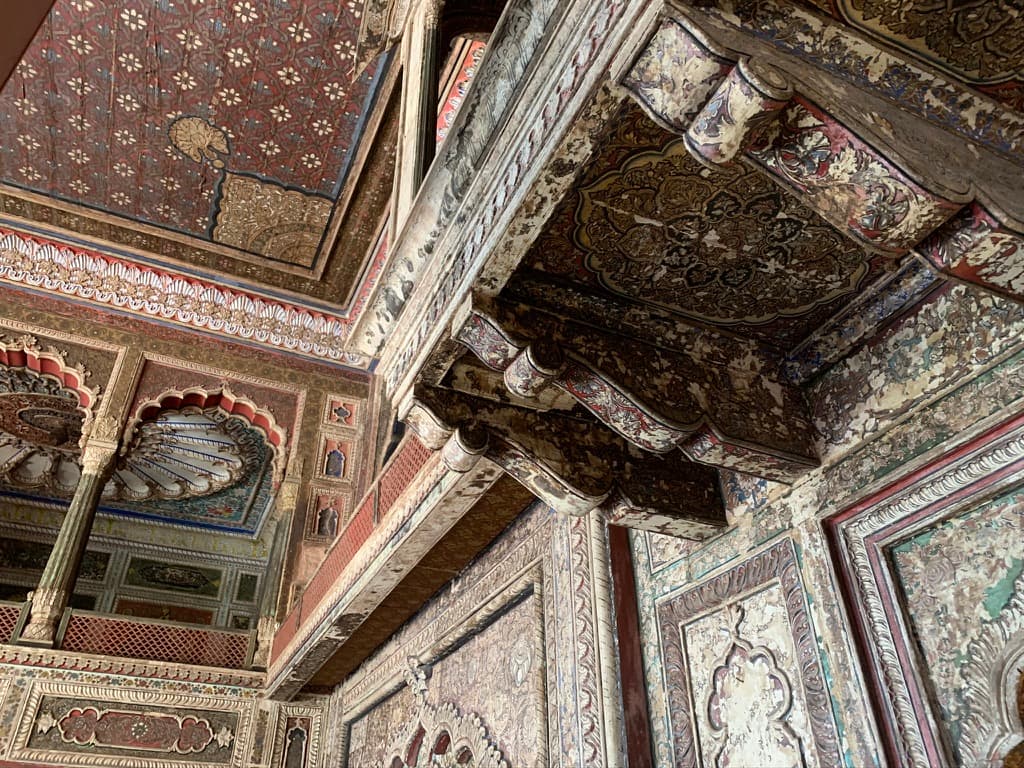
Painted Ceiling: Medallion Panels Meeting at Corner Junction
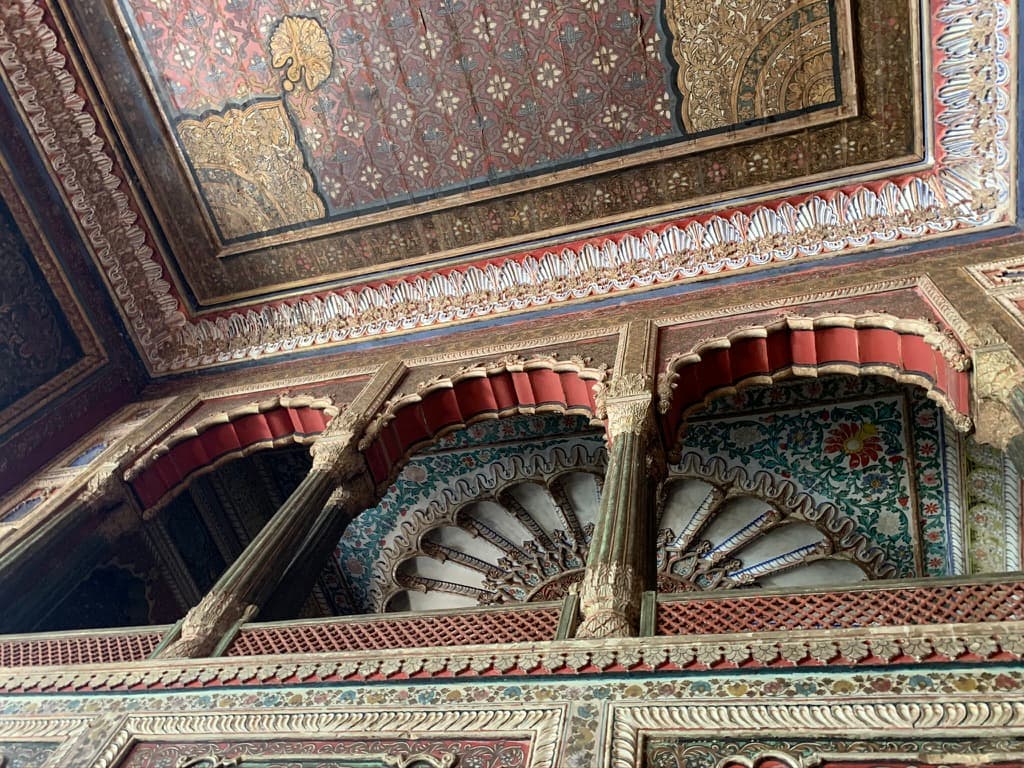
Fan Arches from Below, Gold Leaf Ceiling Panels Above
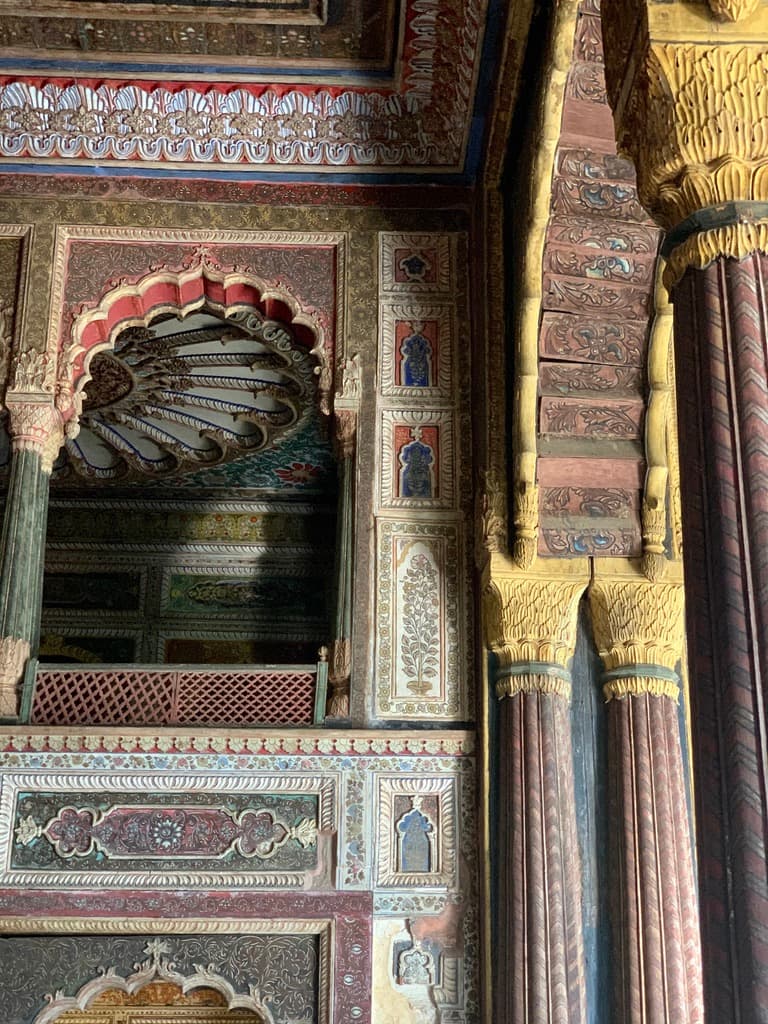
Column Detail: Fan Arch Window and Miniature Painted Panels
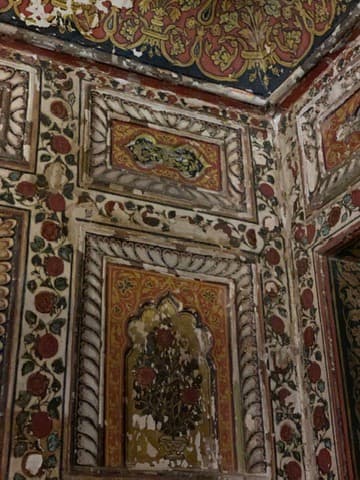
Carved Wooden Panels: Floral Niches and Rose Medallions
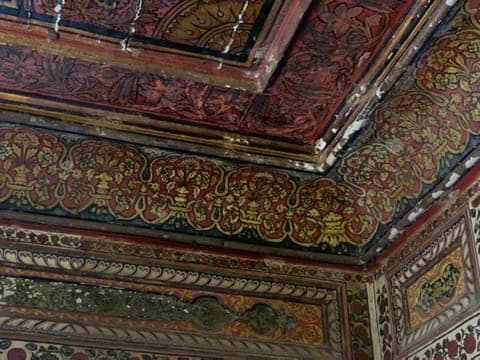
Red and Gold Ceiling Frieze, Intricate Floral Borders
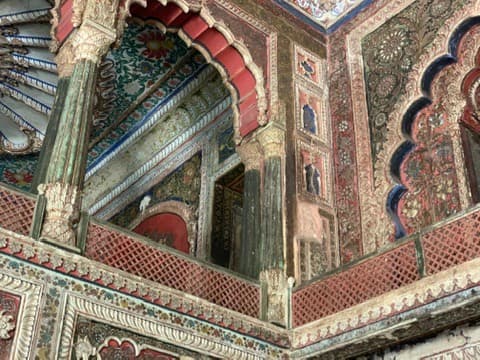
Upper Gallery: Fan Arches and Jali Screens
The Persian Thread
Tipu Sultan's palace blends Indo-Islamic, Persian, and Dravidian traditions, the same cross-pollination that defines Parsi architecture. The floral frescoes descend from Persian miniature painting, the cusped arches echo Mughal courts, and the teak woodwork is distinctly South Indian. Standing inside, you can trace the migration of aesthetic ideas from Isfahan to Sanjan to Bombay to Srirangapatna: the same flowers, painted by different hands, a thousand miles and a thousand years apart.
Sources & Further Reading
Anu Prabhala, "Why Dadar Parsi Colony, Mumbai"
Substack essay on DPC history, community, and demographics
UNESCO: Parsi Zoroastrian Cultural Landscape
World Heritage tentative list documentation of Parsi heritage sites
Mistry, Rohinton. "A Fine Balance" (1995)
Novel set in 1970s Mumbai with vivid depictions of Parsi domestic architecture
Hinnells, John R. "The Zoroastrian Diaspora" (2005)
Academic study of Parsi migration, settlement patterns, and architectural adaptation